
Your family's journey with Think-Nth
Think-Nth manages the mathematics tutoring relationship end to end, from your first consultation through ongoing progress reviews.
How It Works explains the family's journey with Think-Nth. The Think-Nth Method explains how mathematics instruction is designed and delivered.
Five steps, from first call to ongoing review
In plain language — what actually happens after you contact us.
- Step 1
Consult
We learn about the student's current course, goals, concerns, and timeline.
- A free 15-minute consultation with a member of the Think-Nth team — not a salesperson.
- We look at the actual work: a returned test, a homework set, a syllabus or a past paper.
- When useful, Think-Nth may recommend the Free Math Assessment to clarify a starting point or prerequisite gaps. It is not required for every student.
- Step 2
Match
Think-Nth recommends an educator based on mathematics level, expertise, learning needs, and availability.
- You never browse a directory or interview candidates. We make the recommendation and explain why.
- Matching considers the specific course and exam board, not just the subject name.
- If the fit is wrong in the first two sessions, we rematch at no cost and you are not asked to justify it.
- Step 3
Plan
The educator and Think-Nth establish initial learning priorities and a structured starting point.
- Priorities are sequenced by dependency — the prerequisite skill is taught before the topic that needs it.
- The plan names what will be covered, in what order, and what evidence tells us it has landed.
- Single Flex sessions use a focused session-level plan focused on the immediate academic need.
- Step 4
Learn
The student begins live mathematics instruction using the Think-Nth Method.
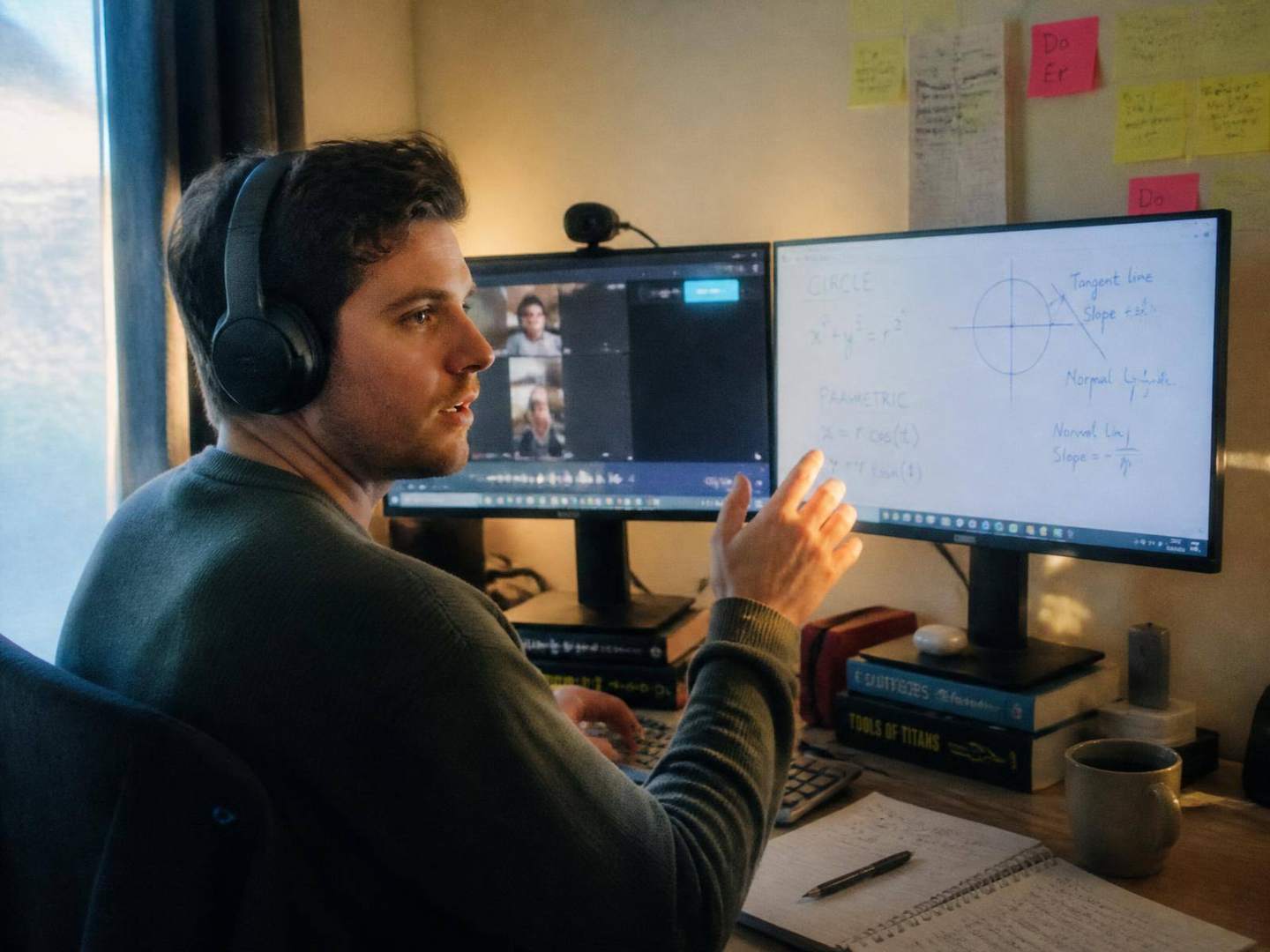
- 60-minute live sessions on a shared whiteboard, with the student working — not watching.
- Educators teach why a method works before drilling it, so the student can reconstruct it under exam pressure.
- Every session ends with a short piece of practice targeted at the idea that was hardest that day.
- Step 5
Review
Progress is documented, reviewed, communicated, and adjusted as needed.
- Session notes after every session: what was covered, what was set, and what comes next.
- Priorities are revised when the evidence changes — a plan that is not working is changed, not repeated.
- Families can follow all of it in the Think-Nth Learning Hub without sitting in on sessions.
Programs and session counts: Browse programs · What it costs: Pricing
How progress is documented: View Results · How educators are selected: Faculty Standards
See the teaching approach in action
One example of how a Think-Nth educator may use an interactive representation to make a mathematical idea visible. Different topics call for different approaches.
Try the mathematics
Don't take our word for it. Move the mathematics.
This is how every Think-Nth session works: you change something, you notice what happens, and your educator asks the question that makes it click. Thirty seconds, no sign-up.
Your educator would ask
“Drag a slider. Before you read anything else — say out loud what you notice.”
Tap the equation to type your own values
A sample of the Think-Nth approach — the student moves the mathematics, the educator asks the question. The dashed curve is y = x², for comparison.
Ready to begin?
The consultation is free and there is no obligation to continue.